Argentine Spanish — A Survival Guide
Voseo, the famous sh-sound, che and essential lunfardo slang — everything that makes Argentine Spanish gloriously different.
Key phrases
¿Vos de dónde sos?
Where are you from?
Che, ¿me pasás el agua?
Hey, can you pass me the water?
¿Qué hacés, boludo? ¡Tanto tiempo!
What's up, mate? It's been ages!
Esta semana estoy a full con el laburo.
I'm flat out with work this week.
Hoy no salgo, tengo una fiaca tremenda.
I'm not going out today, I really can't be bothered.
La fiesta estuvo re copada.
The party was really cool.
Vení mañana y lo charlamos con unos mates.
Come round tomorrow and we can chat about it over some mate.
Ponete una remera, que a la noche refresca.
Put a t-shirt on, it gets cool at night.
No le firmes nada, ese tipo es un chanta.
Don't sign anything with him, that guy is a con artist.
Anoche terminamos todos en pedo.
Last night we all ended up drunk.
¿Ustedes ya pidieron o esperamos a los demás?
Have you all ordered or shall we wait for the others?
Si querés más mate, no digas gracias todavía.
If you want more mate, don't say thanks yet.
A Different Spanish Entirely
Land in Buenos Aires with Spain-trained ears and the first five minutes will humble you. Argentine Spanish — technically Rioplatense Spanish — diverges from Castilian in pronunciation, grammar and vocabulary all at once. It’s not harder, just different, and once you know the four or five core shifts, everything clicks.
The Sh-Sound
The signature feature: ll and y are pronounced like the English “sh” (or a softer “zh”, depending on the speaker). Playa comes out as “pla-sha”, calle as “ca-she”, and yo as “sho”. Nowhere else in the Spanish-speaking world sounds quite like it — Uruguay aside. Add the sing-song intonation inherited from millions of Italian immigrants and you’ll understand why Argentines sound like they’re permanently mid-melody.
Voseo — Forget Tú
Argentina replaces tú with vos, and the verb forms change with it. The pattern is friendly: drop the infinitive’s -r, accent the final vowel.
- vos hablás — you speak (Spain: tú hablas)
- vos tenés — you have (Spain: tú tienes)
- vos vivís — you live (Spain: tú vives)
- vos sos — you are (Spain: tú eres)
Commands follow suit: hablá, comé, vení. Meanwhile vosotros simply doesn’t exist there — the plural you is always ustedes, which honestly simplifies your life.
Che and the Lunfardo Essentials
Che is the universal opener — “hey”, “mate”, “listen”. It’s so Argentine it gave Che Guevara his nickname. Then comes lunfardo, the Italian-flavoured slang born in Buenos Aires’s immigrant neighbourhoods:
- laburar / el laburo — to work / work (from Italian lavoro)
- fiaca — laziness, can’t-be-bothered-ness
- birra — beer
- chau — bye (from ciao)
- boludo/a — mate (among friends) or idiot (otherwise); handle with extreme care
- copado/a — cool, great
- pibe / piba — kid, young guy/girl
Same Language, Different Dictionary
Some everyday words swap out entirely: a t-shirt is a remera (not camiseta), a skirt is a pollera (not falda), a strawberry is a frutilla (not fresa), and sweetcorn is choclo (not maíz). Watch parado: in Spain it means unemployed, in Argentina it usually just means standing up.
Cultural Tip
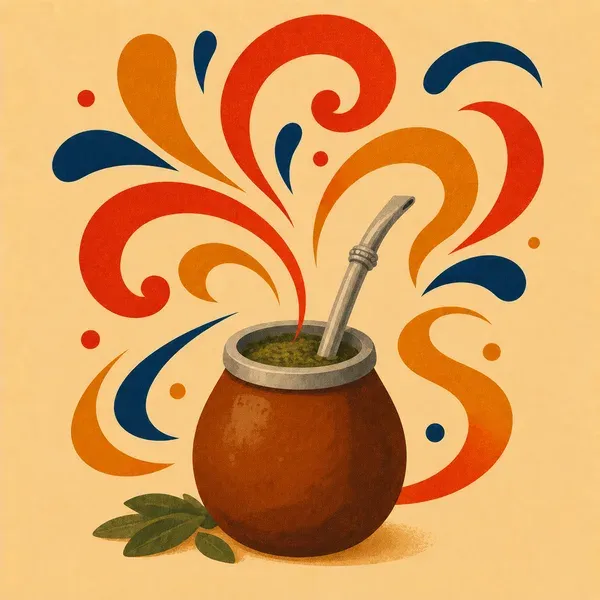
If someone offers you mate, accept it — it’s an invitation into the circle. Drink the whole gourd, hand it straight back to the server, and crucially, only say gracias when you’ve had enough: thanks means “I’m done”, not “how kind”.
Consider this your boarding pass — the full journey through Argentine Spanish is in Daily Life and Culture, part of our Speak Spanish Like a Native book series.