Sounding Natural — Rhythm, Fillers and Flow
Stop sounding like a textbook. Learn the fillers, connectors and word-linking habits that give native Spanish its unmistakable flow.
Key phrases
Pues no sé, la verdad.
Well, I don't know, honestly.
Es que no me apetece salir hoy.
The thing is, I don't feel like going out today.
A ver, ¿qué ponemos de cena?
Let's see, what shall we make for dinner?
O sea, que al final no vienes.
So basically, you're not coming after all.
Total, que perdimos el tren.
Long story short, we missed the train.
Bueno, ya hablamos mañana.
Right, we'll talk tomorrow.
Venga, nos vemos el jueves.
Alright then, see you Thursday.
De hecho, vivía allí de pequeña.
In fact, I lived there as a little girl.
Así que decidimos quedarnos en casa.
So we decided to stay home.
Era en plan muy relajado, sin prisas.
It was like really relaxed, no rush.
Vive en una casa antigua.
She lives in an old house.
Vamos, que no pasa nada.
I mean, it's no big deal.
Why You Sound Like a Textbook
Correct Spanish delivered word… by… word still screams “learner”. Native speech is a continuous stream: Spanish gives every syllable roughly equal weight — that famous machine-gun rhythm — while English crushes unstressed syllables. If you speak Spanish with English rhythm, you sound robotic even when every word is right. The fix isn’t speed; it’s evenness and linking.
Let the Words Melt Together
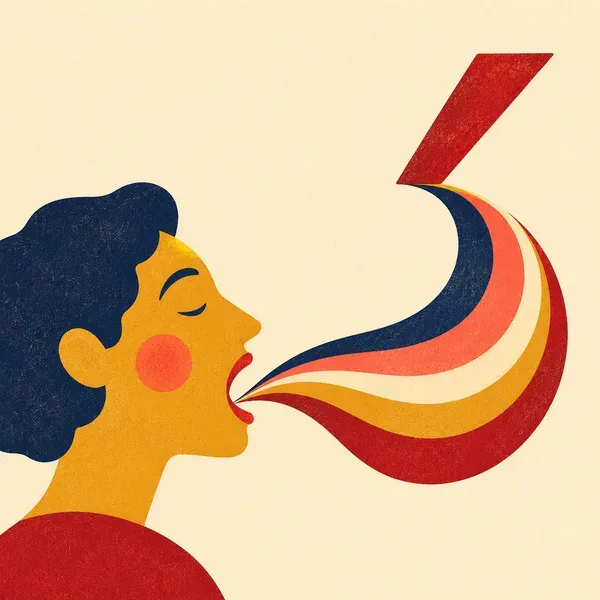
Natives don’t pause between words. When one word ends in a vowel and the next begins with one, they fuse into a single syllable: la amiga comes out as “lamiga”, ¿cómo estás? as “comoestás”, vive en una casa as one unbroken ribbon of sound. Practise phrases as chunks, not word lists. If you can say voy a ir a por agua as one smooth stream, you’re doing it right.
Fillers — The Sound of a Real Person Thinking
Textbooks skip these, yet natives can barely finish a sentence without them:
- pues — well/hmm, the universal stalling word
- bueno — right/anyway, changes topic or starts a goodbye
- a ver — let’s see, before weighing something up
- es que… — the thing is…, softens excuses and explanations
- o sea — I mean/that is, for rephrasing
- en plan — like (informal, big with younger Spaniards)
Drop a natural pues while you think instead of freezing in silence, and you instantly sound less mechanical.
Connectors That Glue Your Story Together
Stories fall flat as disconnected sentences. Natives thread them with así que (so), de hecho (in fact), por cierto (by the way), and the storyteller’s best friend total, que… (long story short) to land the ending. Learn three or four and rotate them.
Pro Tip
Shadow native audio: play a sentence from a podcast or series, pause, and repeat it immediately — copying the melody, the linking and the fillers, not just the words. Commit fully to the imitation. What feels like an exaggerated performance to you usually sounds, to a native, simply normal.
Consider this your starter kit — the deep dive into native rhythm and flow is in Sound Right, Write Right, the book that rounds out the series for anyone who wants to sharpen their speaking and writing further.