Regional guide
Spanish in Cantabria — Casucas, Mozucos and Mountain Speech
How Spanish sounds in Cantabria: the -uco diminutive, montañés heritage, jándalo history and clear northern Castilian — a learner’s guide.
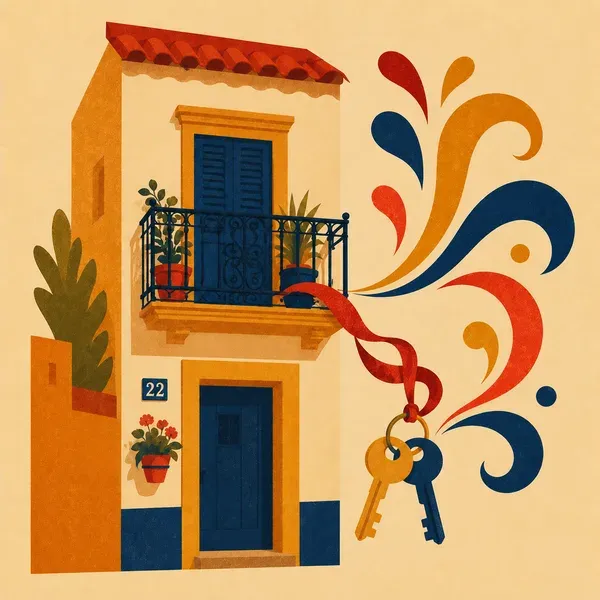
Say it like a local
Tenemos una casuca cerca de la playa.
We have a little house near the beach.
The -uco/-uca diminutive is Cantabria’s signature — "casuca", "mozuca", "pueblucu" in rural speech. Affectionate by default; Cantabrians even call their region "la tierruca".
El mozucu anda ya por los veinte.
The lad is already about twenty.
"Mozo" (young person) plus the house diminutive. In the villages you may hear the final -o tighten toward -u — an echo of montañés, the region’s traditional speech.
Está el día pardo, va a caer agua.
The sky is grey — rain is coming.
Weather forecasting is a conversational duty on the green coast. Cantabrians have a connoisseur’s vocabulary for incoming Atlantic moisture.
Nos comimos un cocido montañés que quitaba el sentido.
We had a mountain stew that was out of this world.
"Quitar el sentido" — to knock the senses out of you — is high praise. The cocido montañés (beans, greens, and the noble parts of a pig) earns it regularly.
The Quiet Northerner
Cantabria’s Spanish rarely makes headlines, and that’s the story: a clear, level, northern Castilian — consonants intact, grammar standard, pace humane — worn over one of Spain’s most distinctive diminutives and the remains of an older mountain speech. If Asturias and the Basque Country are the north’s extroverts, Cantabria is the neighbour who speaks beautifully and sees no reason to mention it.
How It Sounds
Take the broadcast standard, slow it a notch, and attach -uco to anything you have feelings about: casuca (the little house), perruco (the dog), Cantabruca (the homeland, affectionately), la tierruca (same, more so). The diminutive is so identifying that Spaniards can place a speaker from a single -uca. In the mountain valleys, rural speech preserves traces of montañés (also called cántabru) — the local member of the Astur-Leonese family, kin to Asturian rather than a dialect of Spanish — surviving in vowels (-u endings), vocabulary and place names, and studied today by enthusiasts working against the clock.
A Word With a Passport: Jándalo
Cantabria owns one of Spain’s best dialect words about dialect: jándalo — a Cantabrian who emigrated south to Andalusia and came back with aspirated s’s and southern swagger. The word itself is andaluz pronounced with the accent it describes. Centuries of migration for trade made the jándalo a stock figure, and the term — affectionate, faintly teasing — is still understood. Any learner who returns from a Seville semester dropping consonants has been warned: Cantabria has a word for you.
What to Expect as a Learner
Some of the gentlest listening in Spain — a fine place to consolidate before tackling the south. Santander’s speech is textbook-compatible; villages add the -ucos and the montañés echoes. The social register is reserved-then-warm, northern style: give conversations one extra beat and they open. Vocabulary homework is culinary — sobaos and quesada from the Pasiego valleys, rabas (fried squid) with an evening corto of beer — and meteorological, as the sentences above suggest. Tune up with talking about the weather, then meet the louder cousins next door in Asturias and the Basque Country.